
Your unit got wet and the damage lands under the association’s master deductible, so that policy never opens. In Santa Ana that does not mean nobody rebuilds. It means the money comes from somewhere else, and the order matters more than usual.
The deductible is now bigger than most single-unit losses.
The association buys one policy for the building, and that figure has climbed for years here. Carriers keep raising it on any building with a water history.
It comes off the top of every claim, per occurrence, before the carrier pays anything.
Run the arithmetic the board is running. If the repair costs less than the deductible, the carrier pays nothing and the association still picks up a claim.
The claims history an insurer reads at renewal.
A claim on it makes the next renewal cost more, so boards learn fast and stop filing anything small.
The repair then gets funded out of operating money, out of reserves, or out of the owners. Which of the three depends on your CC&Rs.
Section 4775 sets a default your CC&Rs can override.
The association repairs and replaces the common area. The owner maintains the separate interest, meaning the inside of your unit.
A 2017 amendment splits exclusive use common area in half. The owner maintains it and the association repairs and replaces it.
Balconies and patios sit there. Your CC&Rs can override most of it, and most of them do.
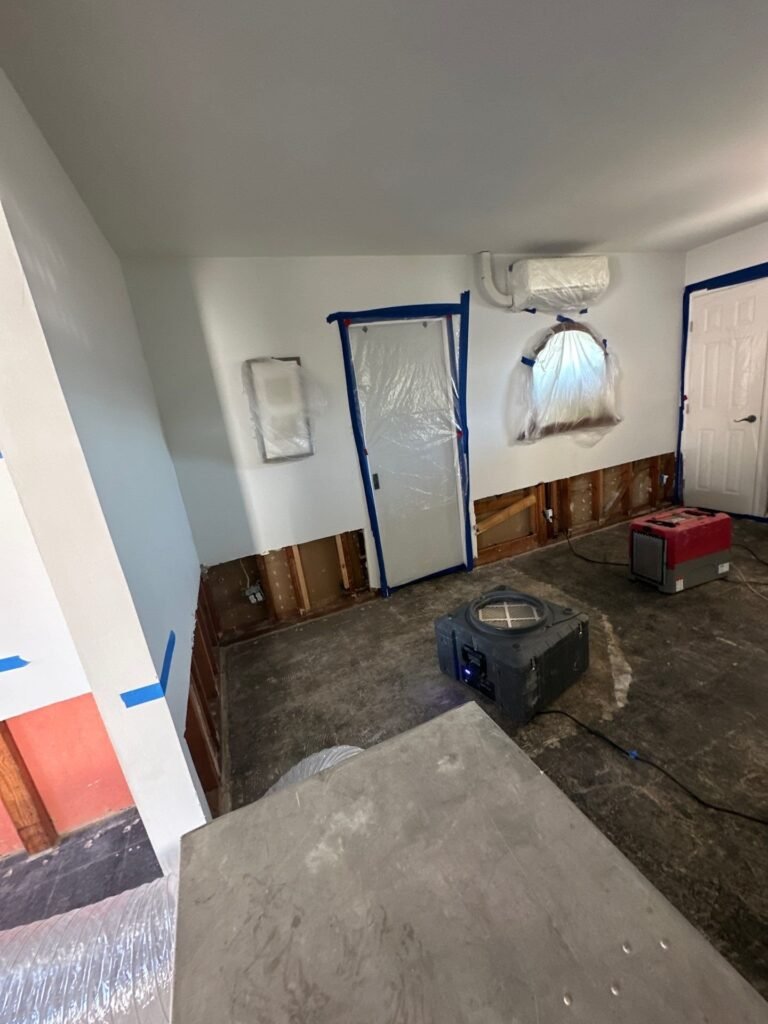
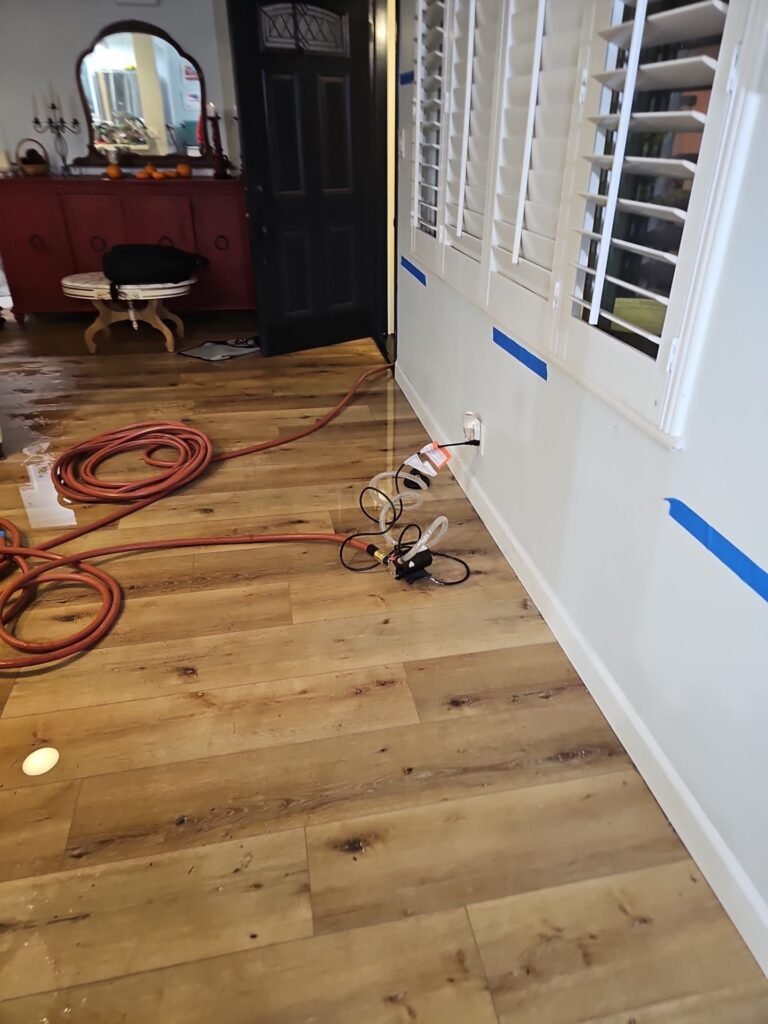
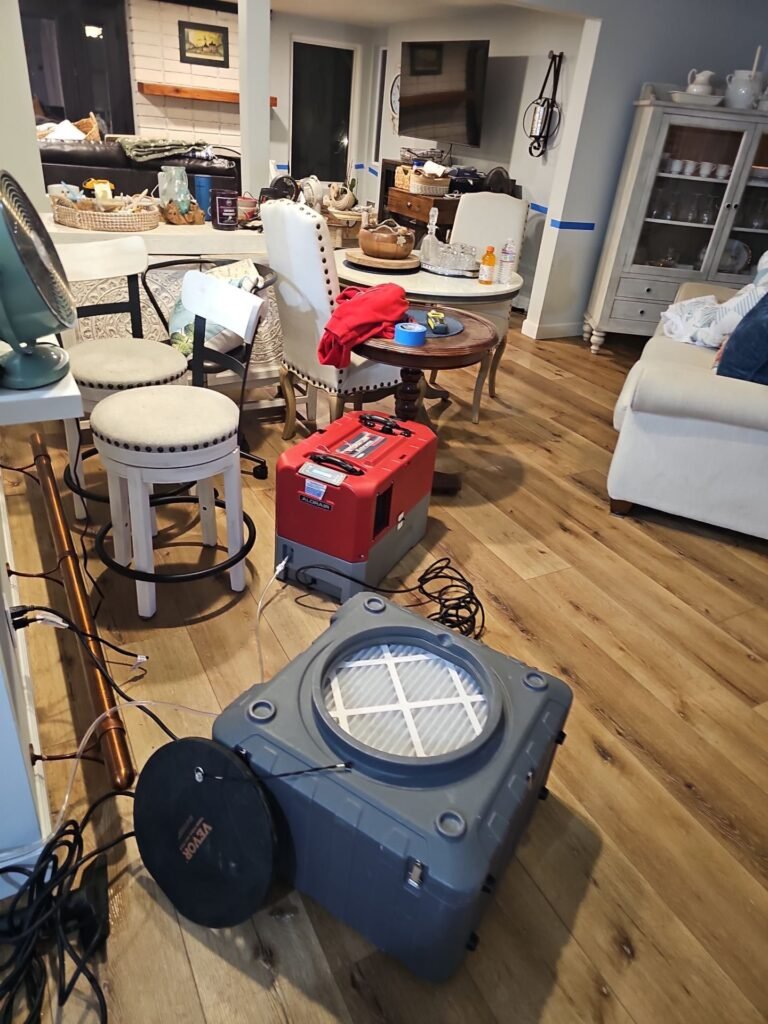
None of that stops water. The drying starts hours before anyone knows whose budget it lands in.
The association passing the shortfall down to every owner.
Something cost money and the master policy never reached its deductible. The board splits the gap using the formula in the governing documents.
Equal shares in some buildings, percentage interest in others. You get a letter with a number on it and a due date.
Sometimes. The coverage is usually an endorsement, not a given.
The peril gate asks whether the loss behind the assessment is something your policy would cover.
Repaving the parking lot is not a covered loss. Funding the deductible after a burst riser usually is.
The limit gate is worse. Policies carry a small default unless somebody bought more, and many forms carry a second, lower cap.
That lower cap applies only to assessments funding the master deductible itself. Which one you get turns on the edition date printed on the endorsement.
Two questions, in this order, before the board votes.
Nobody here knows whether your carrier will pay. Anybody who has not opened your policy cannot promise you it is covered.
One of three shapes, and the manager knows in seconds.
Under bare walls, everything from the drywall surface inward is yours. Under walls-in, your upgrades and your belongings are.
On the day it happens, none of this changes the work. The drying plan is the same either way, and the wet drywall comes out.
It matters four weeks later, when somebody decides who buys the cabinets. By then the cabinets are in a dumpster.
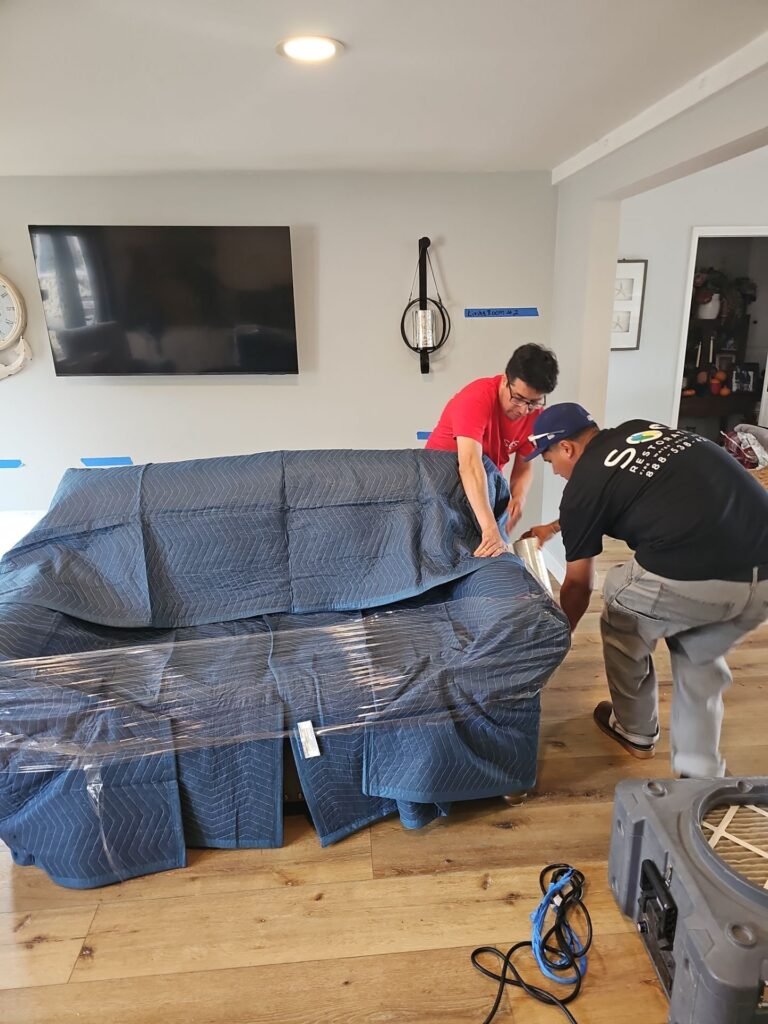
Everything, on the way out, not on the way back in.
That folder is what the manager, the board and your carrier’s adjuster end up arguing over. The side that brought paper wins.
The cost page shows how a mitigation invoice gets assembled.
The side the pipe was on. Size of unit is irrelevant.
Most CC&Rs draw it by who the pipe serves. A line serving more than one unit is common area; a branch serving only you is yours.
So your angle stops, supply lines, water heater, toilet and dishwasher hose are yours. The main stack, the riser and the building shutoff are not.
Two different paragraphs, and people read them as one.
Plenty of CC&Rs put the repair duty on the association regardless of fault. Then they chase the responsible owner for the cost.
So a wall getting fixed quickly tells you nothing about who ends up holding the bill.
Five, and each drags a different trade into the file.
A backed-up stack gets handled as the dirtiest of the three water categories.
Usually yes, and not because anyone enjoys paperwork.
Hard surface flooring pushes sound into the unit below, so most associations above ground level carry a rule.
An underlayment specification, and a sound rating the finished assembly has to hit. Sometimes a ban on anything but carpet in bedrooms.
Like-for-like still needs an application in many buildings, even replacing the exact floor you had. Boards meet monthly, and an approval can eat three or four weeks.
Your wet subfloor cannot wait that long, which is the argument for splitting the job in two.
Drying runs on its own clock. Finishes do not.
We dry, remove what has to go, stabilize the unit, and the flooring waits for the letter.
Submit the modification application while the air movers are still running. Do the same for cabinets or anything touching a common wall.
If the master policy is walls-in and you put quartz where the builder put laminate, the difference is on you.
Decide that in week one, in writing.
More than owners expect, and the manager chases none of it.
The endorsement itself, not just the certificate. One that only says as required by written contract is a different document.
Also where the containment gets built, and who calls the manager before the building water goes off.
Containment is the sealed plastic barrier that keeps dust inside the work area.
One by the hour, one at a fixed written price.
Mitigation is extraction, drying, cleaning, mold work and smoke work, priced by the hour on documented labor. The hourly side carries $61, $69, $79 and $90.
Which one applies turns on the trade and the shift, and those same four show up on the invoice.
Reconstruction is drywall, texture, paint, trim, doors, cabinets, counters and flooring, at one fixed price.
California requires a total price in dollars, signed beforehand.
That comes from Business and Professions Code 7159. A bathroom cannot legally be sold by the hour.
So before one sheet of drywall goes up, you are holding a number instead of watching a meter run.
What moves that number is scope, not mystery. Linear feet of wall removed and how high, texture type, cabinet grade, flooring and transitions.
Also whether plumbing or electrical was opened inside the wall, and whether the city wants a permit. A mid-job change gets its own written order and its own price.
Three business days to cancel, and seven after a declared disaster.
State law also caps the down payment. A contractor asking for a heavy check up front is telling you something.
The seven-day window applies when the repair follows a disaster the state has declared an emergency.
We do not stop at the drywall. It runs as one job.
Insulation, drywall, texture, paint, base and casing, doors, cabinets, counters, flooring, final clean.
One crew that already knows which wall was wet and why.
Four, and they are worth saying out loud.
We hand you the file, the meter log, the photographs and the written scope. What you do with it is yours.
The address the manager will ask for is 2372 Morse Ave #30, Irvine, CA 92614.
The full list is on the front page. If the letter is on your counter, read it to our dispatcher. Everything else is indexed in the guides.
The end of it is a unit that looks like nothing happened and a letter you already know the answer to.