Who pays for the mold clearance test?
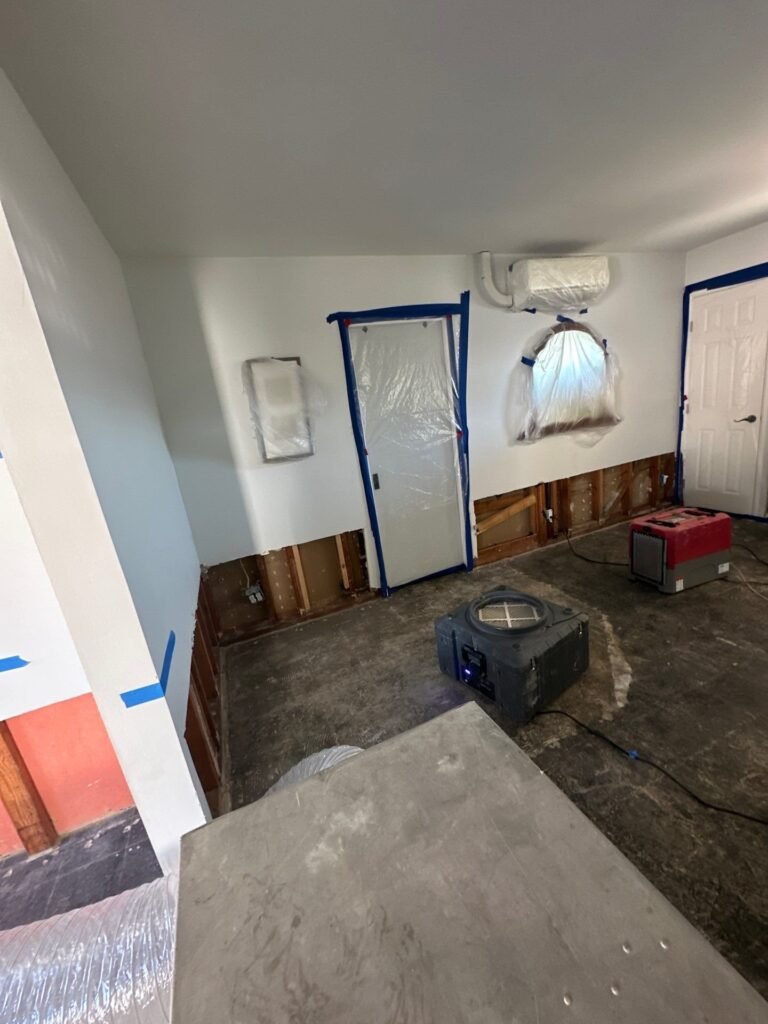
The containment is up, the wall is open, and nothing closes until a clearance test comes back. In Santa Ana the bill usually lands on whoever wants the assurance, most often the homeowner. The crew that did the removal should not pick the tester.
A person answers, day or night. The first look is free. CSLB #1131134 · IICRC #70194273
What does it actually check?
Whether the removal finished, in two halves people confuse.
The first is a person inside the containment with a flashlight and a moisture meter. No visible growth, no damp material, framing and subfloor reading dry.
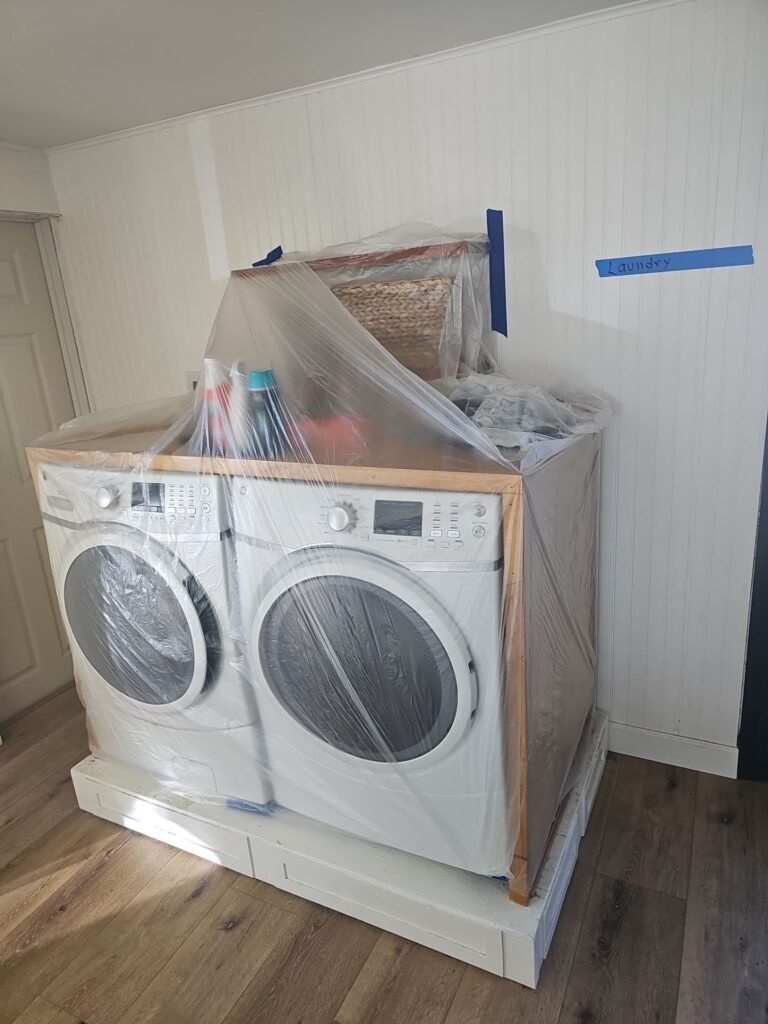
Containment is the sealed plastic room built around the work so dust cannot leave it. The negative air machine exists to keep that dust out of your hallway.
The second half is sampling. Air through a cassette inside, another run outdoors the same day, sometimes a tape lift, all sent to a lab.
Do the numbers decide it?
No. The visual and moisture half carries most of the weight.
Lab pages come back with numbers on them, so people assume the numbers are the answer. Any tester worth paying will say otherwise before you hand over a card.
What can it not tell me?
That the house is safe. No health-based threshold exists.
The California Department of Public Health has been blunt about it. Sampling does not answer the health question people are actually asking. A count is a comparison, not a verdict.
It says little about tomorrow either. Counts move with the hour, with a door opening, with the wind that pushes dust through every screen.
And it says nothing about why the water was there. A pinhole behind that wall will keep dripping through a passing report.
Why not let the crew test?
A company grading its own homework has an interest in the grade.
This is not an accusation of fraud. It is why you would not have the body shop write the estimate and also inspect the repair.
Independent has a specific meaning here. The tester is hired by you, reports to you, does no removal, and takes no referral money.
A tester who gets uncomfortable being asked has answered you.
What do I ask a tester?
Six questions, and the first one matters most.
- Who is hiring you, and who receives the report
- Do you, or anyone paying you, do remediation work
- What are you sampling, and will you run an outdoor control
- Is the walkthrough and moisture check inside the price
- If it fails, who pays for the second visit
- Do I get the lab’s own pages, or only your summary
There is a common version worth naming: the remediation quote already includes clearance testing. That is not automatically wrong, but understand what you bought.
You paid for it inside that price, the remediator picked the lab, and they commissioned the report. Ask for it as its own line.
So who actually pays?
Whoever wants the assurance. The question is who benefits.
The person who benefits should commission the report and receive it. If it is your house and your project, you order it and you pay.
Set against what the removal cost, it is a small line at the end. It is also the only line that produces a document you can hand somebody.
What if a claim is open?
Some carriers reimburse testing. Some treat it as yours.
Most homeowners forms handle mold narrowly enough that nothing here should be assumed. Ask in writing, before the sample, whether testing is covered and what the report must contain.
We document what we find and hand you the file. What your policy covers is between you and your carrier.
What if I rent?
When it is the building, the owner normally commissions and pays.
The owner is the one who needs to know the repair worked. Tenants who pay for their own usually want a document nobody else controls.
That is a reasonable thing to want. Who is obligated in a particular tenancy is a question for the lease, and if it goes far, an attorney.
And in a condo?
Two reports can disagree because they sampled different air.
This tangles in Irvine and Tustin faster than anywhere else. The management company may commission its own test on the common side while you commission yours.
Before anyone pumps anything, get it in an email: who is ordering, who is paying, who gets a copy.
If the house is being sold, it is a negotiated item like every other inspection. Say what you want in the contract language.
What if the test fails?
Somebody re-cleans and somebody re-tests. Which somebody is the question.
Put the sentence in the written scope before the first fan is plugged in. If clearance fails for a reason inside the contractor’s control, the re-clean and second test are theirs.
A missed area, a containment breach, cleaning that was not finished. If a source nobody knew about is still feeding that wall, that is new work and new money.
Asked at the start, that sentence costs nothing. Asked after a failed test, it is one of the quiet ways a final bill grows.
When can I skip it?
When nothing rides on the answer and nobody else is paying.
A patch smaller than a sheet of newspaper, with the leak actually fixed. Materials dry to a meter, nobody coughing, no other party involved.
A careful look with a bright flashlight and a second reading two weeks later is a reasonable place to stop.
Buying a lab report to reassure yourself about a job that size is buying a feeling. There are cheaper feelings.
When is it worth paying?
The moment somebody else’s money or somebody’s lungs is involved.
- An insurer, a landlord, a tenant, an association or a buyer is paying
- Someone living there has asthma and a doctor is asking questions
- The removal needed containment and negative air, so you cannot check it
- You are closing a wall or floor that cannot be reopened cheaply
- Dampness in that spot has already come back once
That last one is the most underrated. A place that got wet twice is telling you something the sampling will not.
It is usually a source problem hiding behind a cleaning problem. Whether material comes out again is a separate argument.
What should the report say?
It should read like a record, not a stamp of approval.
What was examined and on what date. What the moisture readings were and where. Where each sample was pulled, and what the outdoor control read.
The lab’s own pages attached rather than summarized. A single sheet with the word PASS is a receipt, not a report.
Keep it with the daily logs, the photographs and the written scope you signed. The removal itself sits on the mold page, with the rest of the guides.
My Deductible Is Bigger Than the Damage
Insurance Check Smaller Than the Bill?
I Rent, the Apartment Flooded. Now What?
What you want in the drawer at the end is a report somebody else wrote, and a ceiling nobody has to ask about again. Santa Ana, (949) 522-4470.

Water, fire, smoke, mold, storm and sewage cleanup for Santa Ana and the Orange County cities around it. Any hour, any day. Se habla español.