Should I file when the deductible is bigger?
If the repair costs less than your deductible, filing pays nothing and still puts a claim on your record. In Santa Ana that arithmetic shifts fast once drying, hidden moisture or an association’s own deductible enters it. Price the repair first.
A person answers, day or night. The first look is free. CSLB #1131134 · IICRC #70194273
How does a deductible work?
It comes off the top of each claim, not each year.
Below that line you would file something that pays you nothing. That is the whole arithmetic, and it is the right question to ask.
Two things complicate it. Some causes of loss carry a separate, larger deductible. The figure on your declarations page may not be the one that applies.
And it applies per occurrence. The slow drip you found earlier and the supply line that failed later are two subtractions, not one.
Why is the damage bigger?
The stain stops well short of where the water reached.
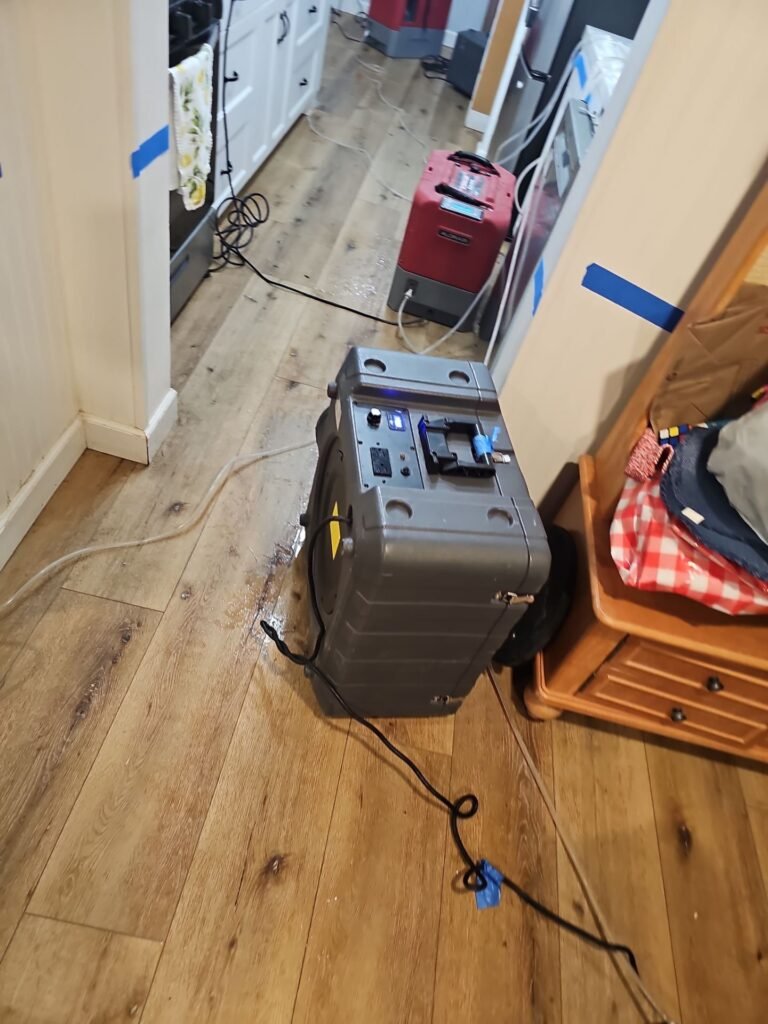
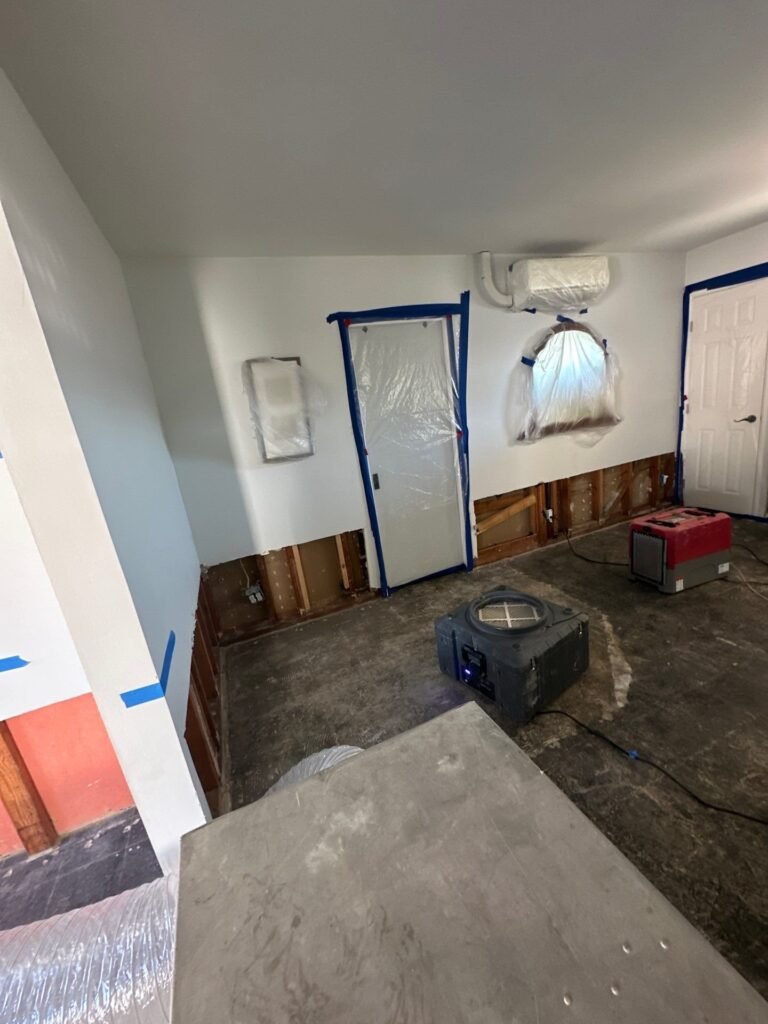
Drywall wicks upward, so the bottom twelve inches of the sheet go too. Then the insulation behind it, the subfloor under the plank, the particleboard kick under the sink.
A meter finds the edge of the wet area, and the edge is rarely where the stain stops.
So the order is boring. Find how far the water went, price the drying and the repair in writing, then hold that against your deductible.
When is it genuinely small?
Caught in minutes, on tile, with nothing soft underneath it.
A braided line under a bathroom sink sprayed onto tile and got mopped. Cabinet doors propped, a fan at the kick for two days.
Check the spot on the third day. If the tile is dry and nothing smells like a wet towel, you are done.
It runs the other way more often than our trade says out loud. Deciding before you measure can cost you a job that cleared the deductible twice over.
What does filing cost me?
An entry on your history, whether or not a dollar moves.
Carriers report losses to a shared industry database and pull from it when they price a policy. That history follows the property and the policyholder for years.
Water losses draw the most attention, because they are the most frequently filed. What your carrier does with the entry is not something we can guess.
Your agent can tell you how the company treats frequency. That is a five-minute call, and it belongs before you file.
Can I ask without filing?
Sometimes. Ask that question before you describe what happened.
Some carriers log any call describing a loss as a notice of loss. Others separate an inquiry from a claim and will say so plainly.
So open with it: if I explain this situation, does it become a claim? Then listen to the answer.
What if the HOA has one too?
Then two deductibles stack, and a real loss can clear neither.
This catches owners in the newer attached housing around Tustin and Irvine, where one wall separates two units. A master policy carries its own deductible, sized for a building.
So you can face damage that plainly came from the building. A personal deductible above the repair, and an association deductible far above that.
Where is that written down?
In the CC&Rs and the master policy summary, nowhere else.
Ask the management company for both, in writing. Two buildings on the same street can be written completely differently.
If the water came from a neighboring unit, the HOA or me guide sorts that. Some boards want to approve work first, which is its own delay.
What do I do instead?
All of the work, and most of the paperwork, either way.
- Stop the water and dry the structure, because your policy asks for that
- Document it as though you were filing, since the wall closes later
- Get the repair quoted in writing, not as a hallway ballpark
- Ask your agent which deductible applies to this cause of loss
- Keep invoices, readings and dated photographs in one folder
Deciding not to file is not the same as deciding to do nothing. If that wall does something strange when the rains come back, the folder ends the argument.
When do we tell you to keep the money?
Often. If the repair lands under the deductible, filing pays nothing and still marks the file.
We measure the room and give you a figure with nothing filed. A repair this size is not worth a record that trails the policy for years.
What can you not answer?
Anything written in a document we have not read.
Whether your policy covers this. What your deductible actually is. Whether the association owns the drywall or only what sits behind it.
What we can tell you is how wet the building is. How far the water went, and what drying it costs.
That is the number the whole decision turns on. If it clears your deductible, the claim page is worth reading, with the other guides.
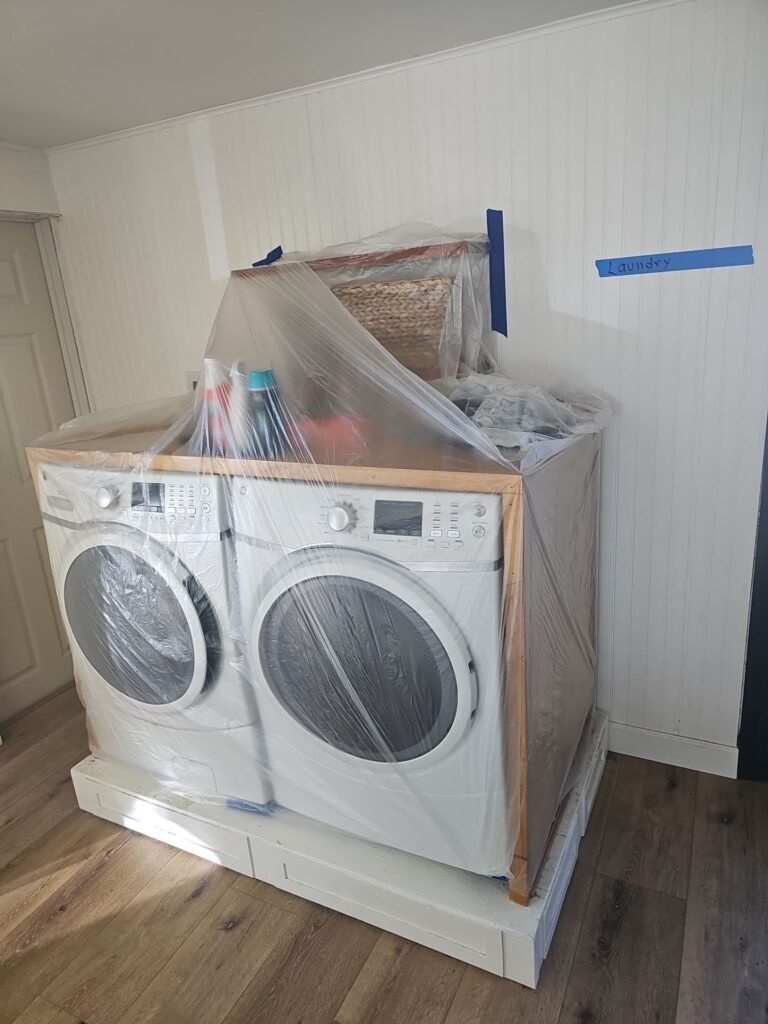
Who Rebuilds After the Drying Crew Leaves?
What Did I Sign Before the Crew Started?
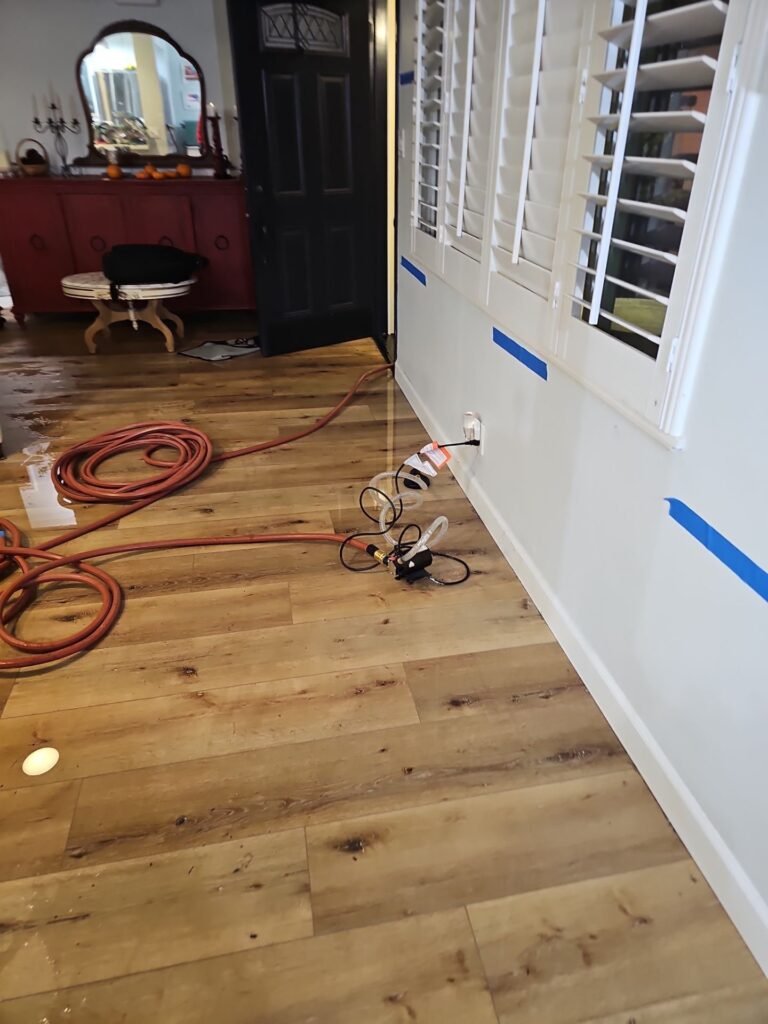
Slab Leak Signs: How Do I Know I Have One?
Either you end up with a repair worth filing on, or with a dry baseboard, a folder in a drawer and a claim history you never touched. Santa Ana, (949) 522-4470.

Water, fire, smoke, mold, storm and sewage cleanup for Santa Ana and the Orange County cities around it. Any hour, any day. Se habla español.