Do I need HOA approval before drying?
Usually not for emergency drying inside your own unit. In a Santa Ana condo the owner can normally authorize extraction and drying of the space they own. Approval belongs to the common areas, to repairs, and to who eventually pays.
A person answers, day or night. The first look is free. CSLB #1131134 · IICRC #70194273
Which decision is theirs?
Who pays and who rebuilds. Not whether drying can start.
Two decisions get folded into one question. The second really is the association’s, and the governing documents settle it, not anybody standing in your kitchen.
People freeze because in a common-interest development almost nothing feels entirely yours. The line between your separate interest and common area sits in a different place in every association.
In some of them it runs down the middle of the drywall.
What can I authorize myself?
Everything inside the walls of the space you bought.
- Standing water in your rooms, and the carpet and pad it soaked
- The flooring you installed and the cabinets you paid for
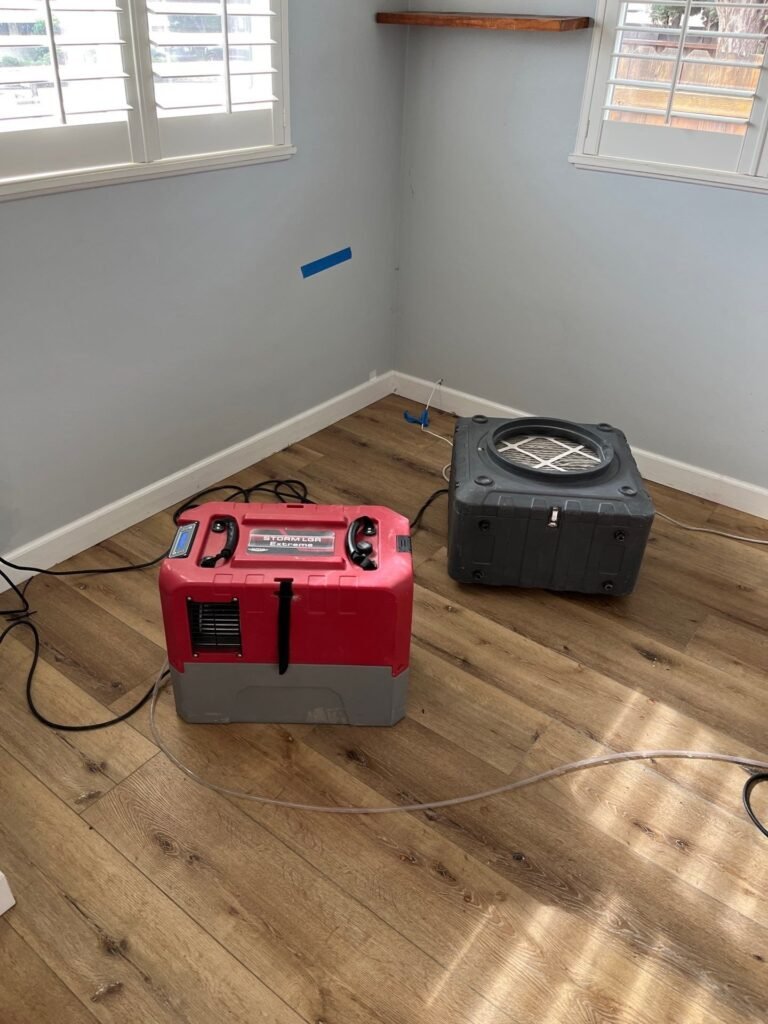
- Fans and a dehumidifier running inside your unit, on your power
- Any shutoff that serves only your unit, the angle stop included
- Moving your own belongings out of the wet
The angle stop is the small football-shaped valve on the wall under a sink.
What is their call?
Anything shared, and anything that reaches past your front door.
- Shutting a riser, the vertical pipe feeding the units stacked above you
- Anything in a hallway, lobby or shared garage, cords included
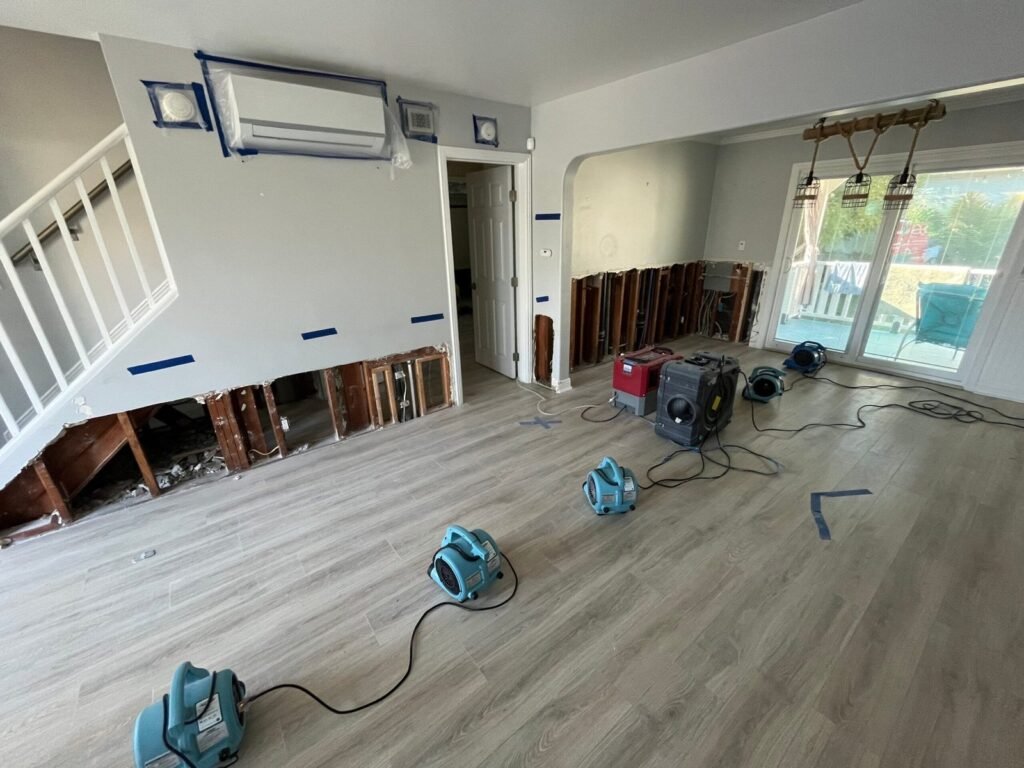
- Opening a wall you share with another unit
- The ceiling of the home below yours
- The roof, the stucco, the crawl space and the slab
- Access to any unit that is not yours
Hold off on those until a person with authority says yes. That includes signing an authorization whose scope reaches past your door.
That last one deserves a slow read even under pressure, and what people sign has its own page.
Why is emergency work different?
One of them has a clock running and the other does not.
Water climbs the drywall, follows laminate seams, slides under vinyl plank and sits. It travels along the bottom plate into the wall you share.
Material that would have dried in place on the first day gets cut out on the third. Most governing documents treat preventing further loss as a different animal from repairs.
Stabilizing is what somebody is usually allowed to start. Rebuilding is what a board approves. We have not seen your CC&Rs, so that is a pattern, not a promise.
What do I do while waiting?
Six things, none of which crosses your own front door.
- Close the nearest valve you control, but not a riser or the main
- Get the standing water out of your unit
- Lift what lifts: rugs, boxes, furniture legs onto blocks or foil
- Photograph each room before anything moves, ceiling and baseboards included
- Open cabinet and vanity doors so air reaches the boxes
- Run air movers and a dehumidifier with the windows shut
If a delay gets imposed on you, take the name of the person who imposed it and the time.
How do I reach anyone?
Call the main number, not your manager’s direct extension.
The recording almost always hands off to an after-hours answering service. The extension just rings into an empty office.
Lead with the words that get you triaged: emergency, active water, your building, your unit number. Then ask for the on-call manager, a ticket number, and the name of whoever answered.
An answering service can get a plumber to a shutoff. It cannot approve construction, so out of hours you are collecting a record, not a yes.
Where is the emergency number?
It hides in the same handful of places every time.
- The annual budget and disclosure packet
- The portal you log into to pay assessments
- The notice board by the mail kiosk or the elevator
- The gate directory sheet
- Your assessment coupon book
Larger master-planned communities around Irvine and Tustin keep an onsite manager, who moves faster than the corporate line. A board member is usually a neighbor.
Knocking on a door feels rude, and it is quicker than email. Send the email anyway, because what you are building is a time-stamped record.
What will they want later?
A packet you can only collect while the loss is visible.
- Written notice with the unit, the date and the time it started
- Where the water came from and where it traveled
- The photographs taken before anything was moved
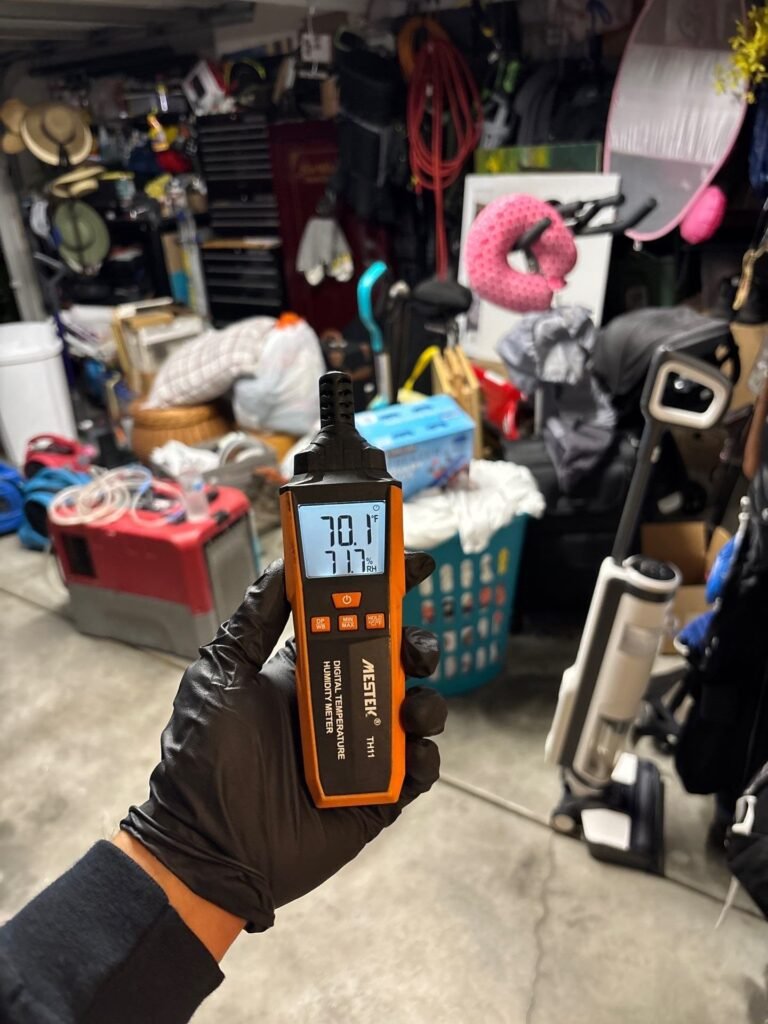
- Daily moisture readings and the marked spots they came from
- A schedule of who will be in the building and when
- A certificate of insurance naming the association
- Coordinated access to the neighboring units
How much of this an association wants varies enormously. Ask your manager which kind you live in while nothing is leaking.
What if they say stop?
Get the instruction in writing, with a name and a time.
It happens, and it is the version that costs people their floors. A manager who has never handled a loss freezes everything. By the time the board votes, the subfloor is gone.
Nobody here will tell you to override your association. If the board has to vote, ask when it meets and whether a decision like this can move faster.
When is this not our call at all?
Anything past your own walls belongs to the association, not to you or to us.
The riser, the slab, the common corridor. We will document what we find there and hand it over, but the work order has to come from them.
And the opposite failure?
A delay is a convenient excuse for equipment that stays too long.
That one is ours to own. If drying is genuinely paused, the fans should be off and out, not sitting there earning.
Ask for the daily numbers either way, and ask what they mean. What the equipment is for sits on the restoration page.
Whether the bill lands on their side of the line is a different question. The rest arrives in the guides.
I Rent, the Apartment Flooded. Now What?
How Wildfire Ash Gets Into a Closed House
Who Rebuilds After the Drying Crew Leaves?
The part of the building that is unquestionably yours can be dry and quiet by the time anybody calls you back. Santa Ana, (949) 522-4470, whatever the hour.

Water, fire, smoke, mold, storm and sewage cleanup for Santa Ana and the Orange County cities around it. Any hour, any day. Se habla español.