A pipe burst in my condo. Whose problem?
A burst pipe in a Santa Ana condo is almost never one party’s problem. The association usually carries the shared plumbing and the structure. You carry what sits inside your unit and everything you own. Your CC&Rs decide where that line falls.
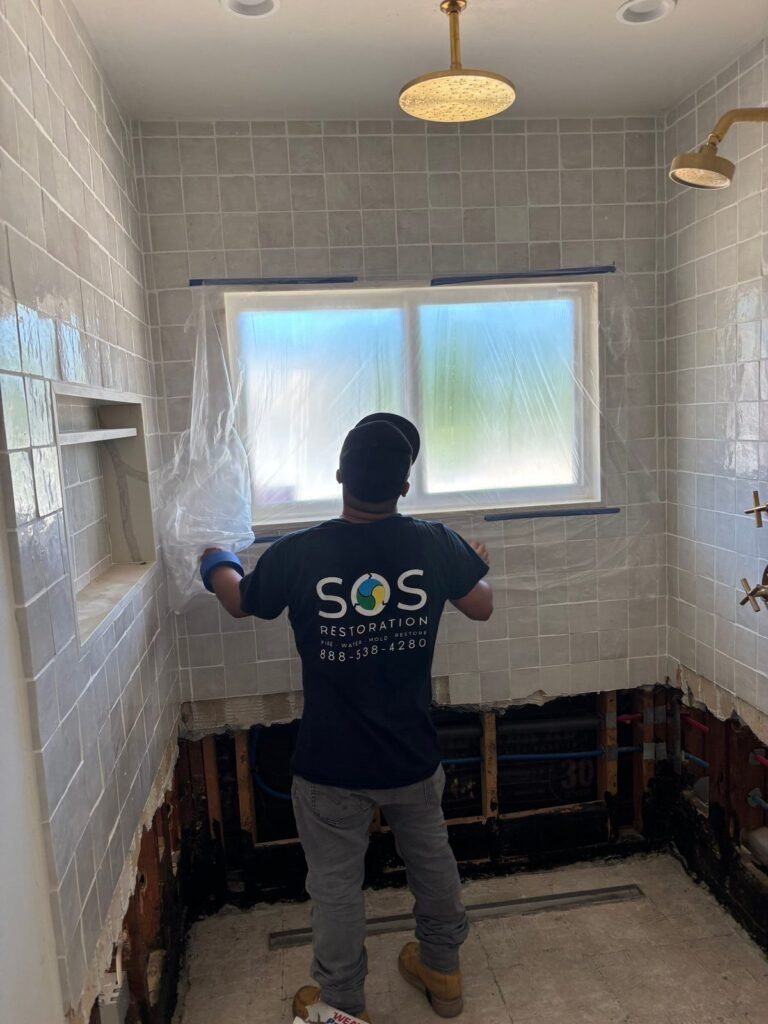
A person answers, day or night. The first look is free. CSLB #1131134 · IICRC #70194273
Where does their job end?
Almost never at one clean line. The loss gets divided.
The usual dividing principle is service. Plumbing that serves more than one unit tends to be the association’s. Plumbing that serves only yours tends to be yours.
Then the recorded declaration comes along and moves that line, sometimes generously and sometimes not at all.
Which pipes belong to the building?
Anything that serves more than one household.
- Vertical risers running inside a shared chase
- The main supply and the sewer lateral out to the street
- The stack carrying three kitchens down to one drain
- Anything buried in a common wall or under the slab
In a garden-style Santa Ana fourplex that is a short list. In a five-story Irvine building with a central mechanical room it is long.
What is mine regardless?
Your belongings, nearly always. The master form insures the building.
Not the sofa, not the rug, not the boxes in the storage closet. And not the hotel room while air movers run in your living room.
Owners are regularly surprised, because a monthly assessment feels like it should buy more than it does.
What do the CC&Rs decide?
What a unit physically is. That definition is the whole argument.
Associations fall into a few patterns, and yours is written on paper somebody can hand you.
- Bare walls: their coverage stops at the unfinished face of the drywall
- All in: their coverage reaches the fixtures the builder originally installed
- Hybrids, plus amendments recorded long after the original declaration
Under bare walls, cabinets, flooring, fixtures and the wall finish belong to you. Under all in, only your upgrades and your contents do.
We cannot read yours and will not guess at it. Ask the management company in writing for the declaration, the bylaws and the insurance summary.
What does my own policy do?
It covers your things, your upgrades, and somewhere to sleep.
Most individual condo forms carry personal property, liability, the improvements you made, and living expenses while the unit is unlivable. Often the part of the loss inside the walls too.
The deductible is where it gets uncomfortable. A master deductible can swallow a mid-sized water loss whole, so the policy responds and pays nothing.
Some declarations let the board charge that deductible back to the owner where the water started. Some do not. If the numbers are close, whether to file is worth a day.
Why does a loss assessment matter?
The association passing a bill down to every owner.
Many condo forms carry a limit for your share of it. Some also cover a master deductible passed back to you.
That limit is often modest by default and can frequently be raised for very little premium. In a building with a punishing master deductible, that is a call to your agent.
Does the cause matter?
Yes, twice, and only one of them settles early.
Most forms respond to water that escapes suddenly and accidentally, and exclude damage that accumulated for months. A pinhole that fed a wall cavity is a different conversation from a hose that let go.
The physical evidence usually shows which one you had. So never cut out the failed section and drop it in the dumpster.
The second is fault, and the two carriers may sort that out months later. Nobody can tell you in the first hour how it lands.
What proves where it came from?
Where the water entered, and how far it went first.
- The failed component photographed in place, then bagged and kept
- The shutoff you used, and roughly when you reached it
- Wide shots showing which wall, which unit, and which way the floor slopes
- Anything already in writing: the maintenance request, the email, the text
- Moisture readings taken across the boundary, if the water crossed one
Give the same set to the association and to your own carrier. When both sides work from the same photographs, the disagreement is about interpretation, not facts.
Who do I notify first?
Both, the same day, and let neither hold up the drying.
Water inside a wall cavity does not wait for a board meeting. Most declarations leave an owner room to stabilize an emergency inside their own unit.
That delay has a page of its own.
Ask the management company for four things in writing.
- The name of their insurance carrier
- The master deductible
- Who can approve work in common areas after hours
- Whether the association has already opened a claim
Write down who answered you. In a large Irvine association that line may reach a desk keeping office hours, so send the email too.
When is none of it yours?
A failure inside the common riser belongs to the association, not to the unit owner.
Your policy still covers what it ruined inside your walls. The pipe itself is not yours and not ours: it belongs to the association under the CC&Rs.
What is outside your reach?
Anything your declaration says, since nobody here has a copy.
Two units in the same complex can read completely differently on paper. We cannot say whether your claim gets paid, or how the carriers settle between themselves.
What a drying crew does is measure, photograph and log. The folder then reads the same whichever party holds it.
That folder is what an insurer sits down with. The paperwork half is on the claim page, and the guides carry the remainder.
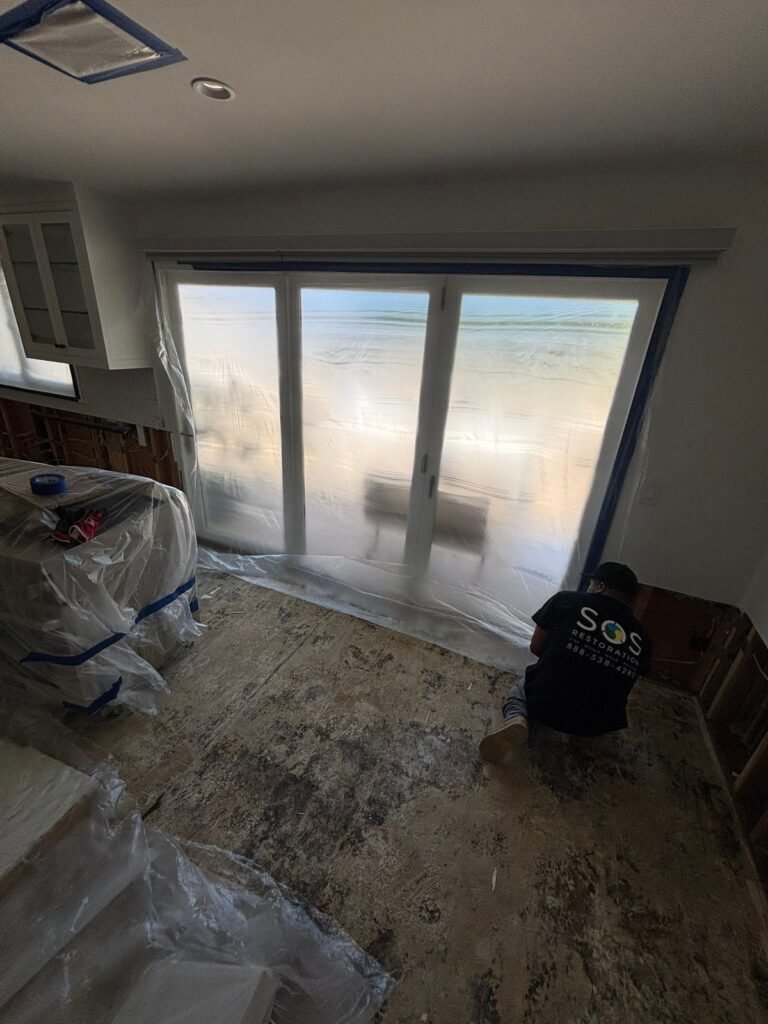
Do I Need HOA Approval to Start Drying?
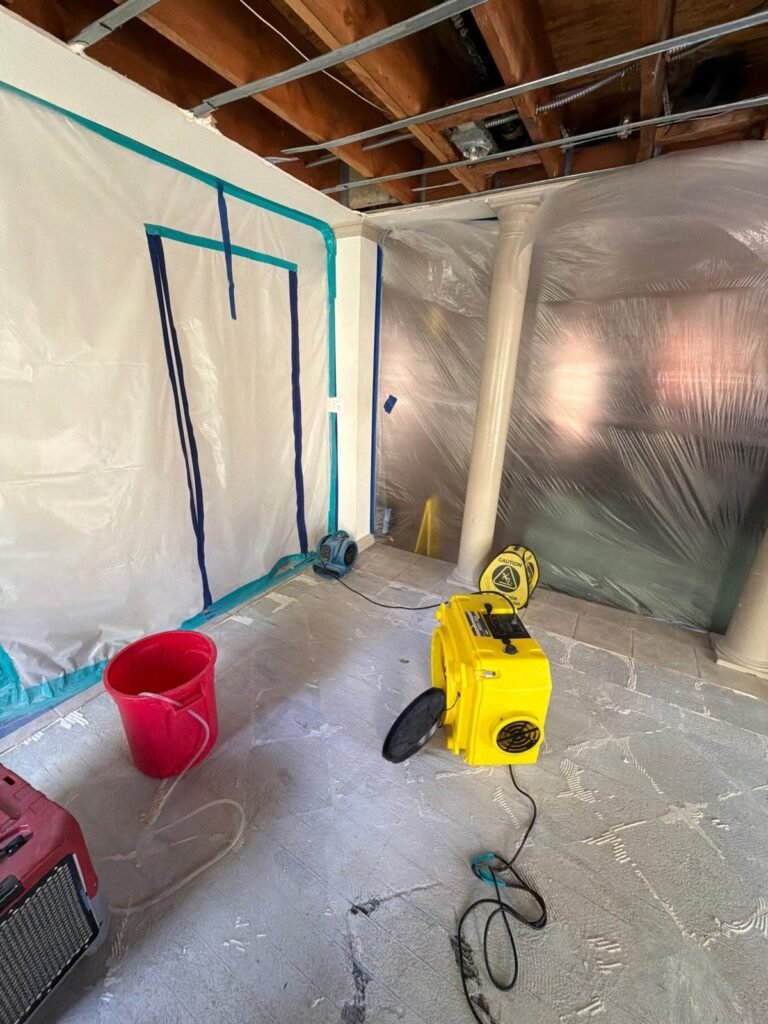
Cupped Hardwood Floors: Can They Be Saved?
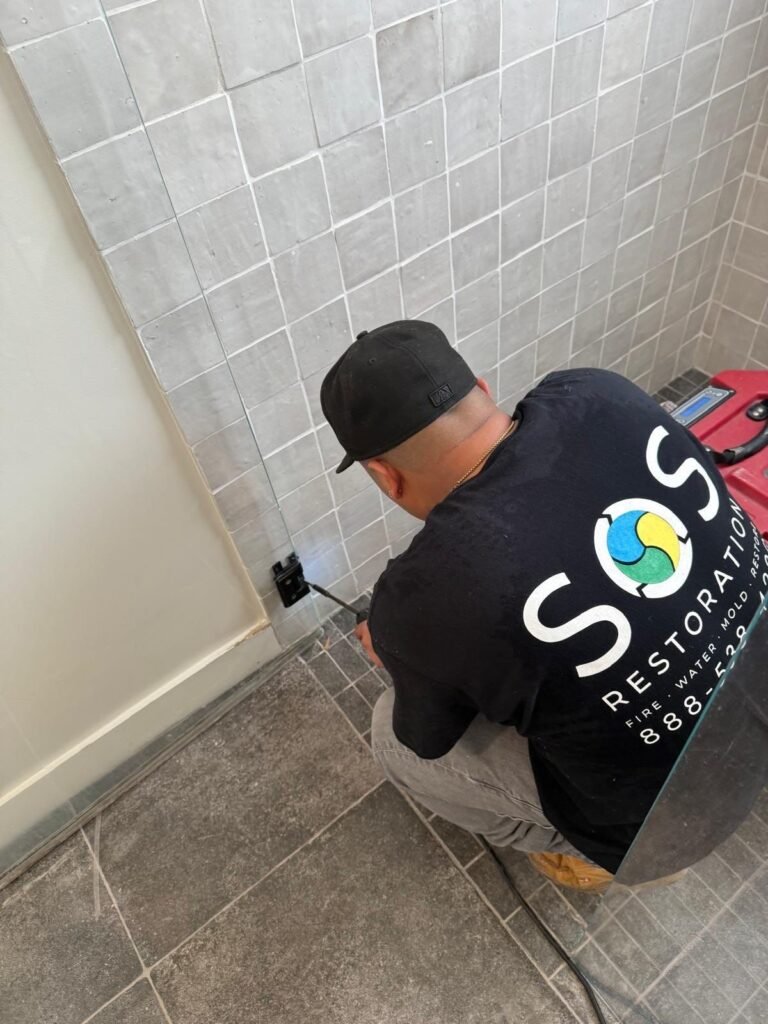
My Deductible Is Bigger Than the Damage
What ends this is a dry unit, an unbothered neighbor, and one folder both sides read the same way. Santa Ana, (949) 522-4470, whatever the hour.

Water, fire, smoke, mold, storm and sewage cleanup for Santa Ana and the Orange County cities around it. Any hour, any day. Se habla español.