How do I know I have a slab leak?
Most slab leaks in Santa Ana announce themselves before anyone sees water. One warm patch of floor. A meter that keeps moving with every faucet closed, a bill that doubled, a damp baseboard. The meter is the test worth doing first.
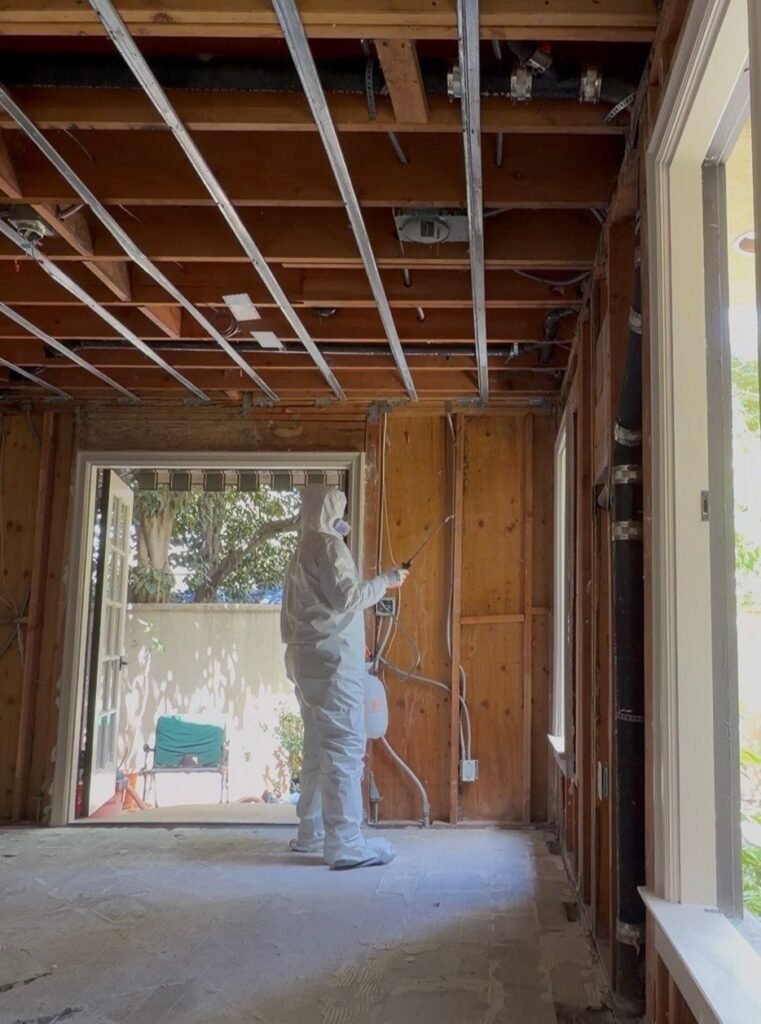
Coming out to read the meters costs nothing. CSLB #1131134 · IICRC #70194273
What is leaking down there?
A supply line inside or under the concrete floor.
Almost every house in this part of Orange County sits on a slab poured on grade. Copper water lines run through it or beneath it before coming up inside a wall.
When one gives out, the water has nowhere to go but sideways. It follows the path of least resistance until it finds a seam, a joint, or the soil outside.
Why the hot side so often?
Hot water is harder on copper, and the line runs warm.
It sits warmer in damp soil and spends its life expanding and contracting against whatever it rests on. That is why the first sign is usually a temperature change, not a puddle.
It is also entirely possible to have one and see nothing. A leak under a slab can drain into the ground for months without marking the house.
Which signs should I trust?
Five, and they are ranked by what each one tells you.
- A warm patch of floor, found barefoot before the sun warms anything
- The meter still moving with every tap in the house shut
- A bill that stepped up and never came back down
- Running water you can hear in a quiet house
- One damp baseboard, one cupped strip, one grout line that keeps opening
The loudest sign is rarely the most informative one. Cracks in the slab prove very little; plenty of sound houses have had hairline cracks since the pour.
What does the warm patch mean?
A leaking hot line is heating the concrete above it.
On tile, vinyl plank or sealed concrete your foot finds the difference. Carpet over a thick pad hides it, and wood hides it longer than you would expect.
Where the patch sits matters. One along the run between the water heater and a bathroom says more. One in the middle of a bedroom says less.
A cold-line leak gives the reverse, a patch that reads cool and faintly damp. Almost nobody catches that one by accident.
How do I run the meter test?
Six steps, an hour, and no tools beyond a screwdriver.
- Shut down the ice maker, the irrigation timer and the pool auto-fill
- Shut down a softener that regenerates and any recirculating pump
- Open the meter box at the curb with a screwdriver, not fingers
- Find the low-flow indicator, the small dial that spins on any movement
- If it turns while the house is quiet, water is going somewhere
- Close the main on the house side, then read the meter again
If your meter has no indicator, write the reading down to the last digit. Leave the water alone for an hour and read it again.
Still moving after the main is closed means the loss is outside, or in the irrigation. Stopped means it is inside, and the slab is back in the running.
To sort hot from cold, close the cold inlet on top of the water heater and watch again. If it settles, the hot line is the suspect.
What does the test prove?
That water is escaping. It finds nothing by itself.
It narrows the field, which is worth a great deal when you hand the problem to somebody with equipment.
Do not let anyone open a floor on the strength of a warm spot alone.
What imitates a slab leak?
Seven things, and each is cheaper to fix than concrete.
- A toilet flapper leaking intermittently, which moves the meter and costs real money
- An irrigation valve or drip line, with the floor perfectly dry
- A condensate line backing up in a closet, without touching the meter
- The water heater pan, or the discharge pipe off its relief valve
- A shower pan or failed curb seal, wetting the next room’s baseboard
- Ground moisture pushing up through an older pour with no vapor barrier
- Runoff off a slope reaching the garage from outside after a wet week
No meter will ever show that last one.
Is this urgent?
Usually it can wait a day, and two things change that.
A slab leak is not the emergency people picture. Nothing collapses in an hour, and most have been running for weeks by the time anyone notices.
What they do instead is run without stopping. Washing fines out from under the concrete, holding the bottom of the framing wet, feeding a smell.
Water on the finished floor, or drywall going dark at the base, means it stopped being a plumbing problem. Hearing it plainly from standing is not a weep either.
What is a legitimate stopgap?
Closing the main while you line up help.
It costs you nothing but flushing the toilet with a bucket. If the test pointed at the hot side, close the cold inlet at the heater instead.
That keeps cold water at every sink in the house.
Who finds it and who fixes it?
Three separate jobs, and one crew rarely does all three.
A detection crew listens to the floor and isolates the hot and cold sides. Sometimes they trace gas, and on the hot side they read the slab with a thermal camera.
Detection narrows a leak to an area, not always to a point. A second pass after the first opening is normal, not a sign somebody guessed.
A crew that tells you that up front is being straight with you.
What are the repair options?
Three roads, and the right one depends on the history.
- Open the slab at the mark and fix that section
- Abandon the run and reroute a new line overhead
- Repipe the house and stop chasing it entirely
It turns on how many leaks this house has already had. And on what the pipe looks like once it is exposed.
If this is not your first one, that pattern of repeat pinholes is itself the finding. Weigh it before you commit to a spot repair.
The pipe is fixed. Now what?
The house is still wet. A repair stops the source only.
Water is already sitting in the concrete and the sill plate. Also under the flooring and in the bottom foot of drywall.
That is where restoration starts, with readings on materials that look fine to the eye.
If the floor is hardwood, whether it comes back is its own question.
What cannot be said from here?
Anything that needs a look at your actual floor.
Photographs do not diagnose a slab leak. A dozen things wet a floor, and they look identical once the carpet is dark.
Nor whether a single fitting gave out or the copper as a whole is going.
Where insurance lands is not ours to answer. Most forms treat the damage and the pipe repair as separate questions, and how long it ran matters.
The mark a detection crew leaves is their best read, not a promise. The rest of the questions sit in the guides.
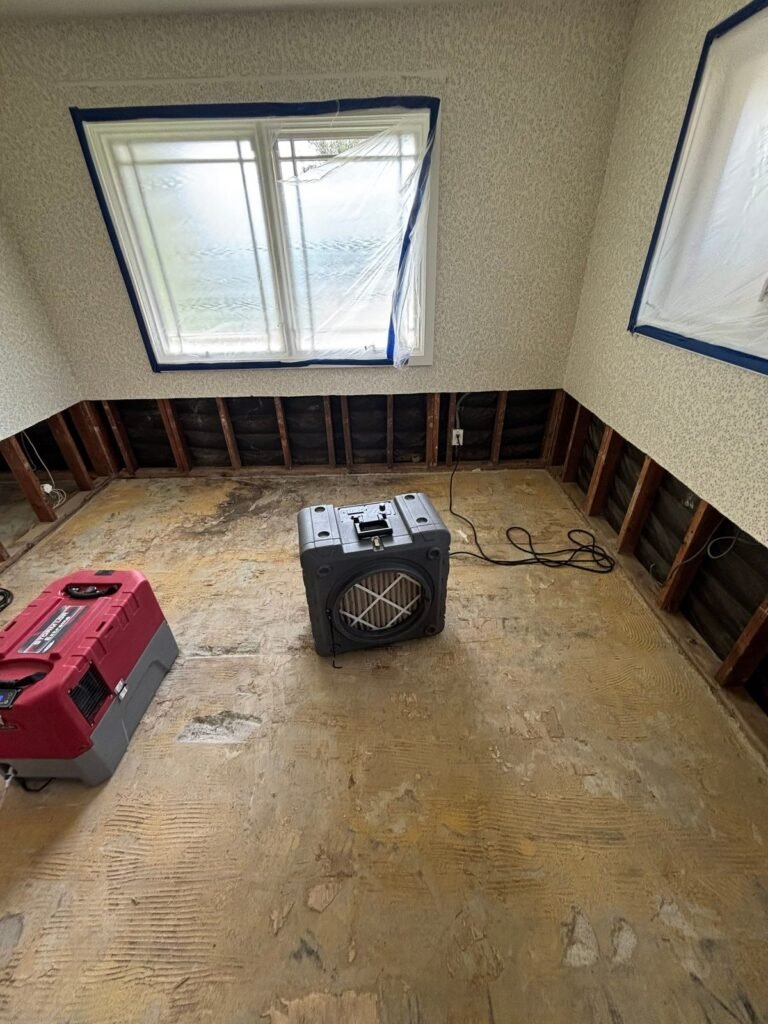
Drywall Dried on Its Own: Do I Cut It Out?
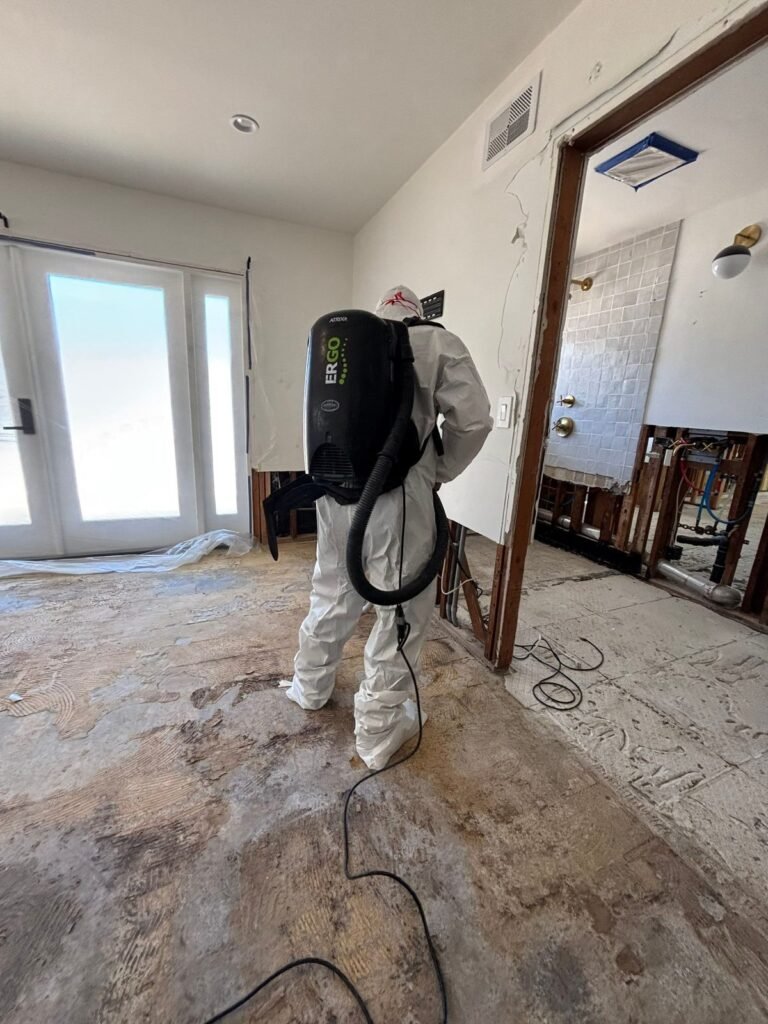
Mold Clearance Test: Who Pays for It?
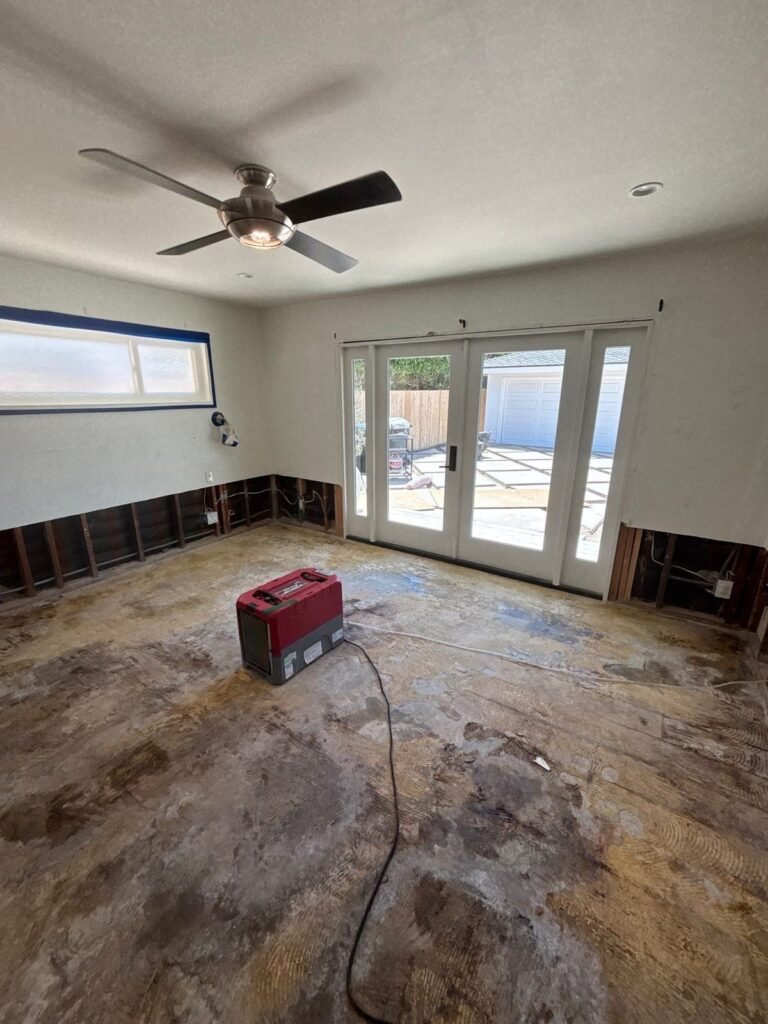
Who Pays to Rebuild My Condo?
The end of this is a floor that reads the same temperature everywhere and a water bill that goes back to being boring. Santa Ana, (949) 522-4470.

Water, fire, smoke, mold, storm and sewage cleanup for Santa Ana and the Orange County cities around it. Any hour, any day. Se habla español.